School fees, rent and medical bills in Singapore are priced in Singapore dollars. If the money for them is in rupiah, the amount of rupiah you need changes every day with the exchange rate. The fee hasn’t changed, but your cost in rupiah has.
What’s different in Singapore
At home, most costs and savings are in the same currency, so a price is a price. Paying Singapore costs from rupiah adds a second number that moves on its own: the exchange rate.
Bank Indonesia publishes a reference rate for the Singapore dollar against the rupiah every working day at 15:30 Jakarta time. It’s a useful benchmark, but the rate you get from a bank or a money changer includes its own spread and fees, and it can differ from bank to bank and from day to day.
An example
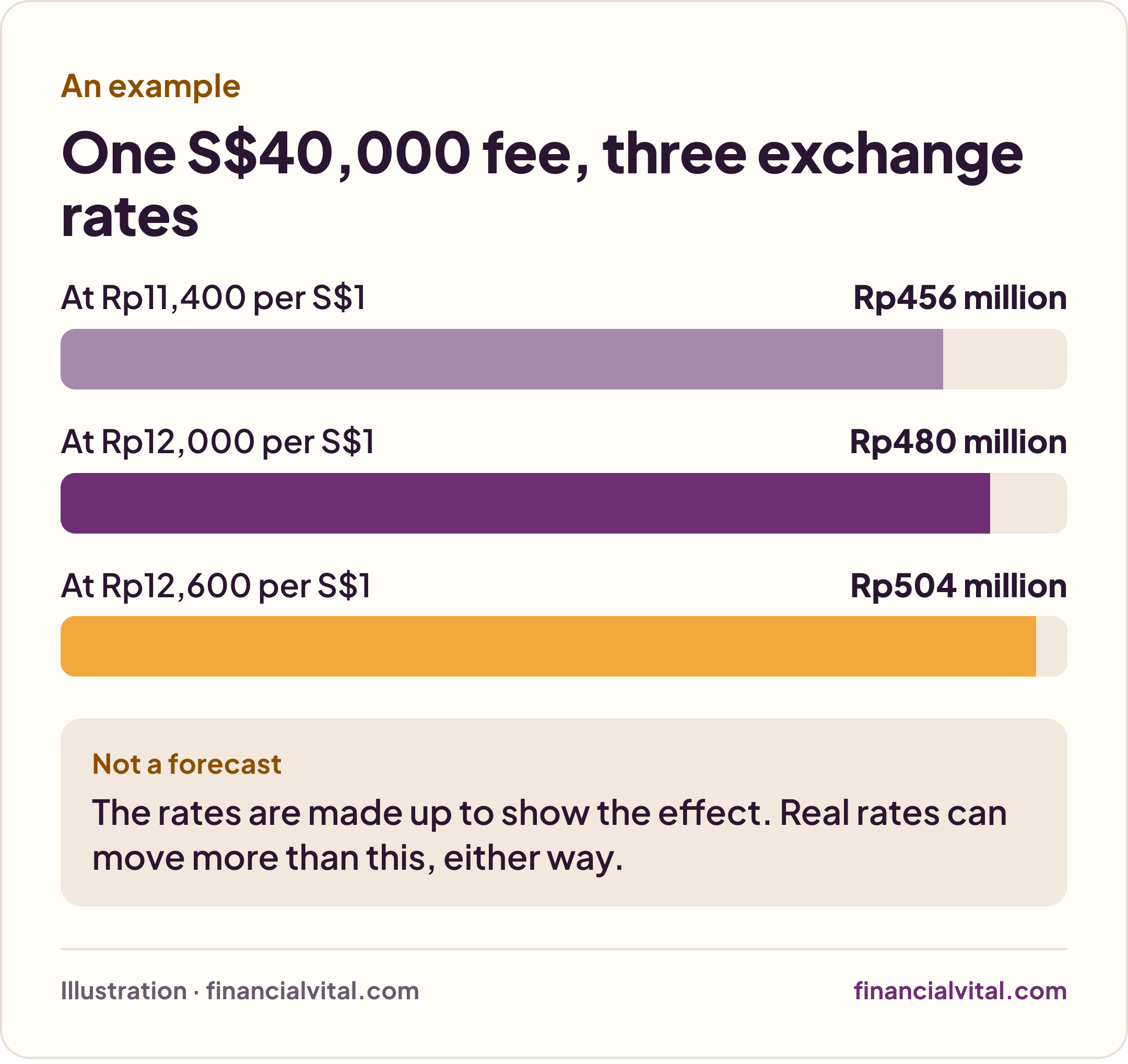
Say a school charges S$40,000 a year. The fee stays the same, but the rupiah needed to pay it doesn’t:
- at Rp11,400 per Singapore dollar, it costs Rp456 million
- at Rp12,000, it costs Rp480 million
- at Rp12,600, it costs Rp504 million
That’s a gap of Rp48 million between the lowest and the highest rate here, on one year’s fee. These rates are made up to show the effect. They aren’t a forecast, and real rates can move more than this, in either direction.
How to plan for the gap
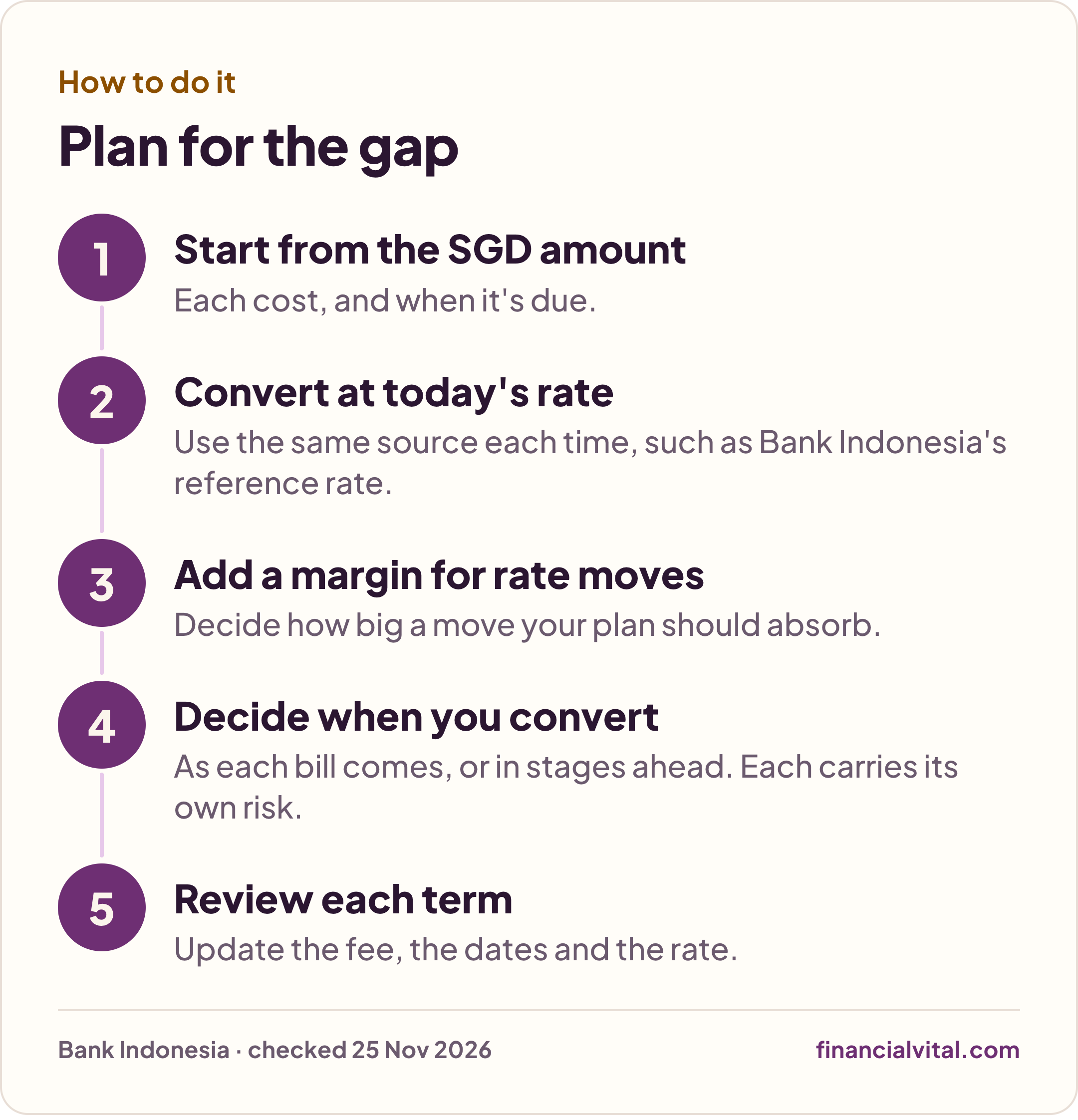
- Start from the Singapore-dollar amount. Write down each cost in SGD and when it’s due.
- Convert at today’s rate to see the rupiah amount. Use the same source each time, such as Bank Indonesia’s reference rate, so changes are easy to compare.
- Add a margin for rate moves. Decide how big a move your plan should absorb without strain.
- Decide when you convert. Some families convert as each bill comes, others in stages ahead of time. Each way carries a different risk, and none removes it.
- Review each term or each year. Update the fee, the due dates and the rate.
What this doesn’t do
Knowing the gap doesn’t tell you which way the rate will move, and nobody can. It shows how much a move would cost you, so it doesn’t arrive as a surprise. If you keep money in a Singapore bank, remember that deposit insurance covers Singapore-dollar deposits only, up to its limit (see Singapore insures SGD deposits only).
Learn with others
Questions about managing money between Indonesia and Singapore? Join the Financial Vital community to learn alongside other Indonesian families and business owners.
Sources
All checked on 25 Nov 2026.
- Bank Indonesia: JISDOR, Non-USD/IDR Reference Rate and Transaction Rate: the daily SGD/IDR reference rate, published at 15:30 Jakarta time
- MoneySense: Understanding credit card interest and charges: exchange rates vary from day to day and from bank to bank
- MoneySense: Understanding deposit insurance: foreign-currency deposits are not insured