
Many Indonesian families come to Singapore for treatment, and the hospital bill is the cost everyone plans for. Around it sit costs that are easy to miss: return visits, somewhere to stay, a companion, time away from work, a longer visit pass, and the cost of converting money.
What’s different in Singapore
Non-residents pay the full rate. Since 2008, foreigners who aren’t Singapore permanent residents receive no government healthcare subsidy. At public hospitals, non-residents are admitted to private-class wards: at the National University Hospital, for example, that means Deluxe, A1 or B1 class.
A deposit often comes first. Hospitals usually ask non-resident patients for a deposit at admission, and it can be the whole estimated bill. A letter of guarantee from an insurer or an employer can reduce or replace it.
A longer stay needs a longer pass. If treatment runs past the stay you were given, apply to the Immigration and Checkpoints Authority (ICA) to extend your visit pass before it expires. For medical treatment, ICA asks for Form V75, endorsed by a registered doctor in Singapore.
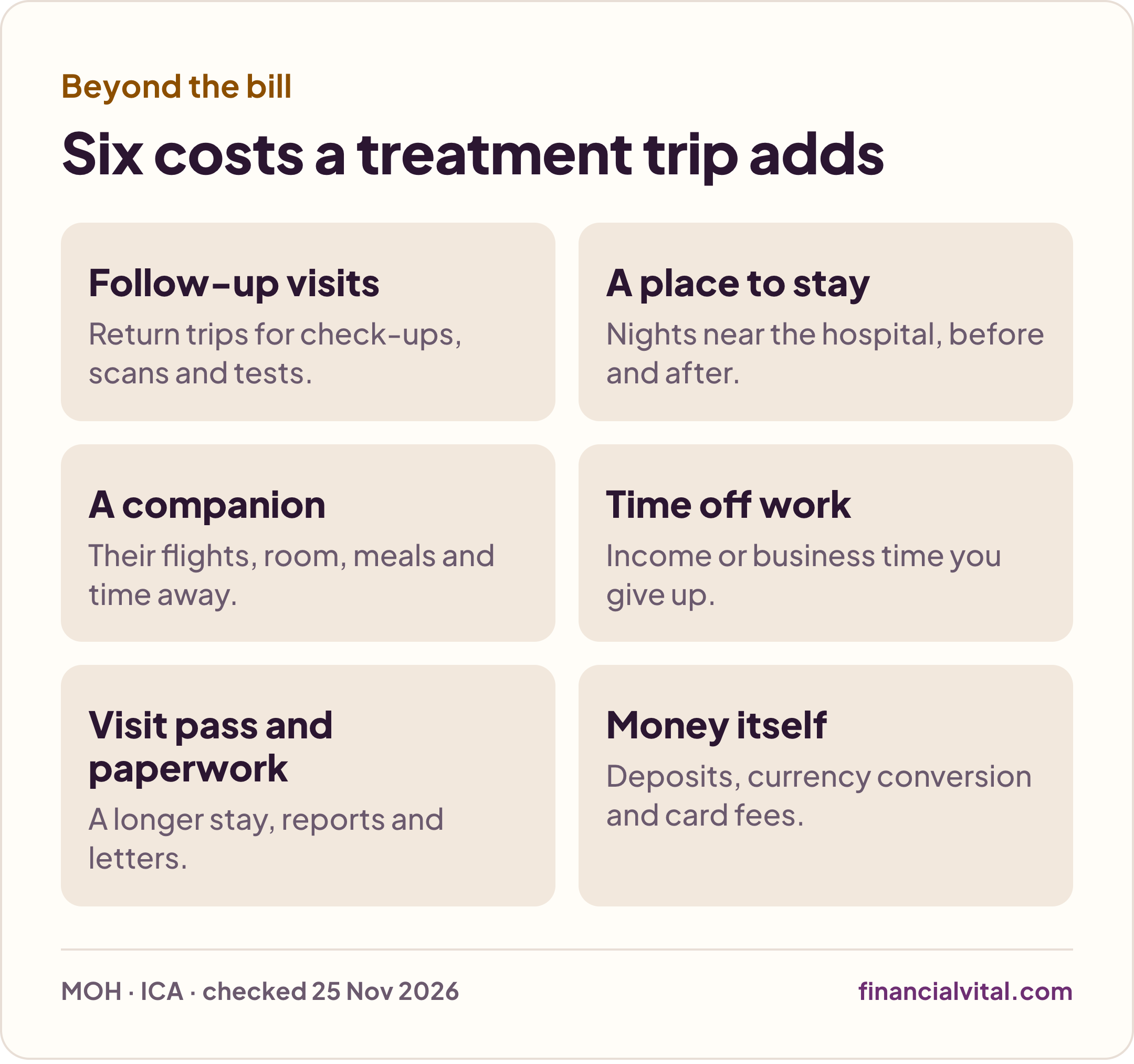
The costs around the bill
- Follow-up visits. Check-ups, scans and tests can mean several trips, each with flights and nights away.
- A place to stay. Many patients stay near the hospital before and after treatment.
- A companion. A family member’s flights, room, meals and time away from their own work.
- Time off work. Income or business time you give up while you’re away and recovering.
- Visit pass and paperwork. Extending your stay, and getting reports and letters for your insurer.
- Money itself. Deposits paid upfront, and the exchange rate and fees each time you convert money or use a card in another currency.
Some insurance policies pay you back after you’ve paid, rather than paying the hospital directly. Even with good cover, you may need the cash first.
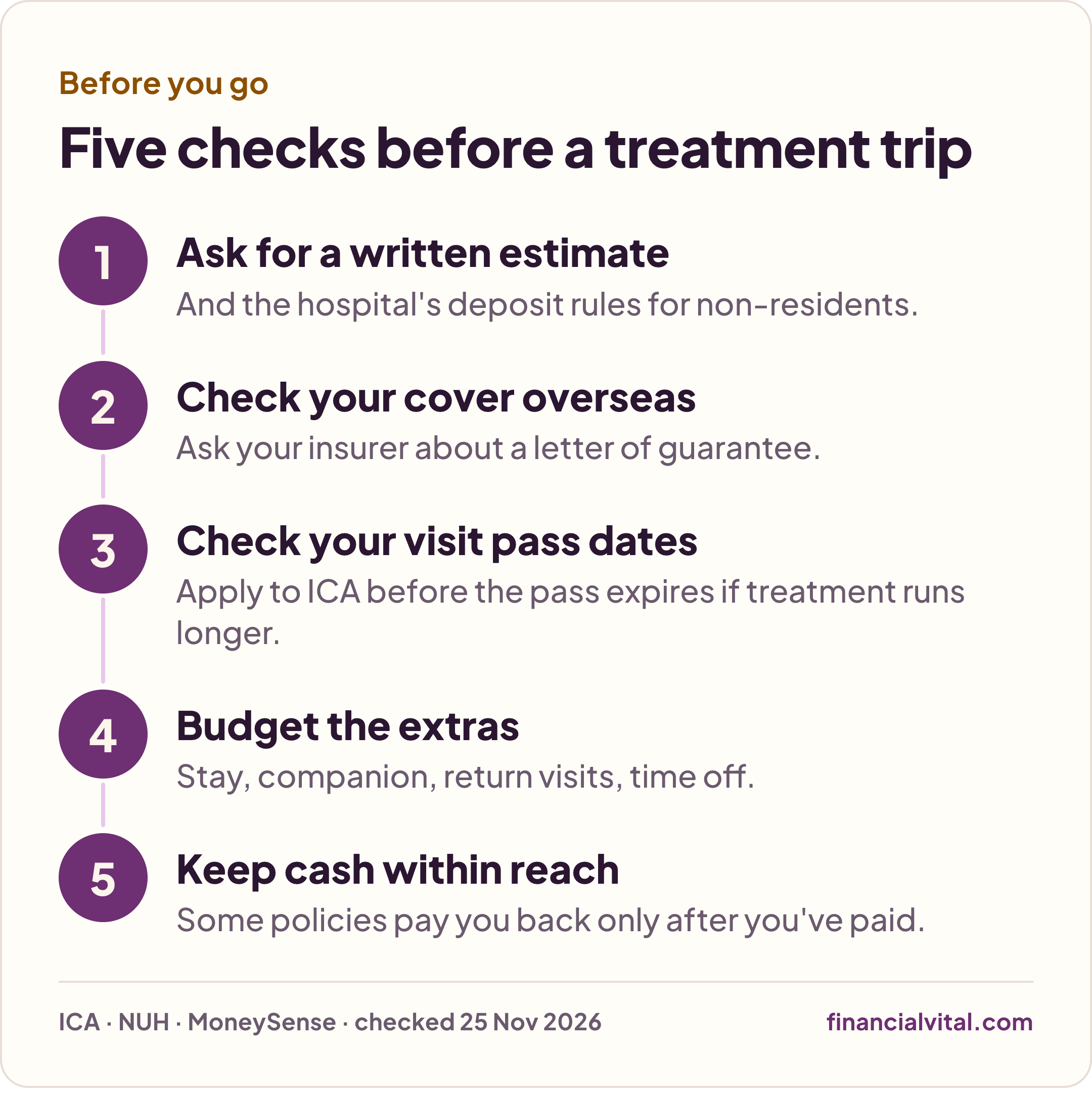
Before you go
- Ask for a written estimate, and the hospital’s deposit rules for non-residents. MOH publishes typical bills and fee ranges you can compare an estimate against.
- Check what your insurance covers in Singapore, and ask whether it can provide a letter of guarantee.
- Check your visit pass dates. If treatment may run longer, plan the extension early.
- Budget the extras: the stay, the companion, return visits and time off.
- Keep enough cash within reach to pay deposits and bills before any claim is paid.
Learn with others
Questions about managing money between Indonesia and Singapore? Join the Financial Vital community to learn alongside other Indonesian families and business owners.
Sources
All checked on 25 Nov 2026.
- MOH: Reduced hospital subsidies for non-citizens: no government healthcare subsidy for foreigners who aren’t permanent residents, since 1 January 2008
- MOH: Hospital bills and fee benchmarks: typical bills and fee ranges to compare an estimate against
- NUH: Fees and charges: non-residents admitted to Deluxe, A1 or B1 class wards
- NUH: Your hospital stay: a deposit of the whole estimated bill may be required; letters of guarantee
- ICA: Short-Term Visit Pass extension: Form V75 endorsed by a registered doctor; apply before the pass expires
- MoneySense: FAQs for consumers on basic financial planning (PDF): some insurance policies pay on a reimbursement basis
- MoneySense: Understanding credit card interest and charges: foreign-currency conversion and international transaction fees