
Total and permanent disability, or TPD, is one of the events most life insurance pays out on, alongside death. In general terms, it means an illness or injury has left someone permanently unable to work. For a family, the strain can last longer than people expect: the income stops, while the person still needs to live, and often needs care, for years.
What it means, in general
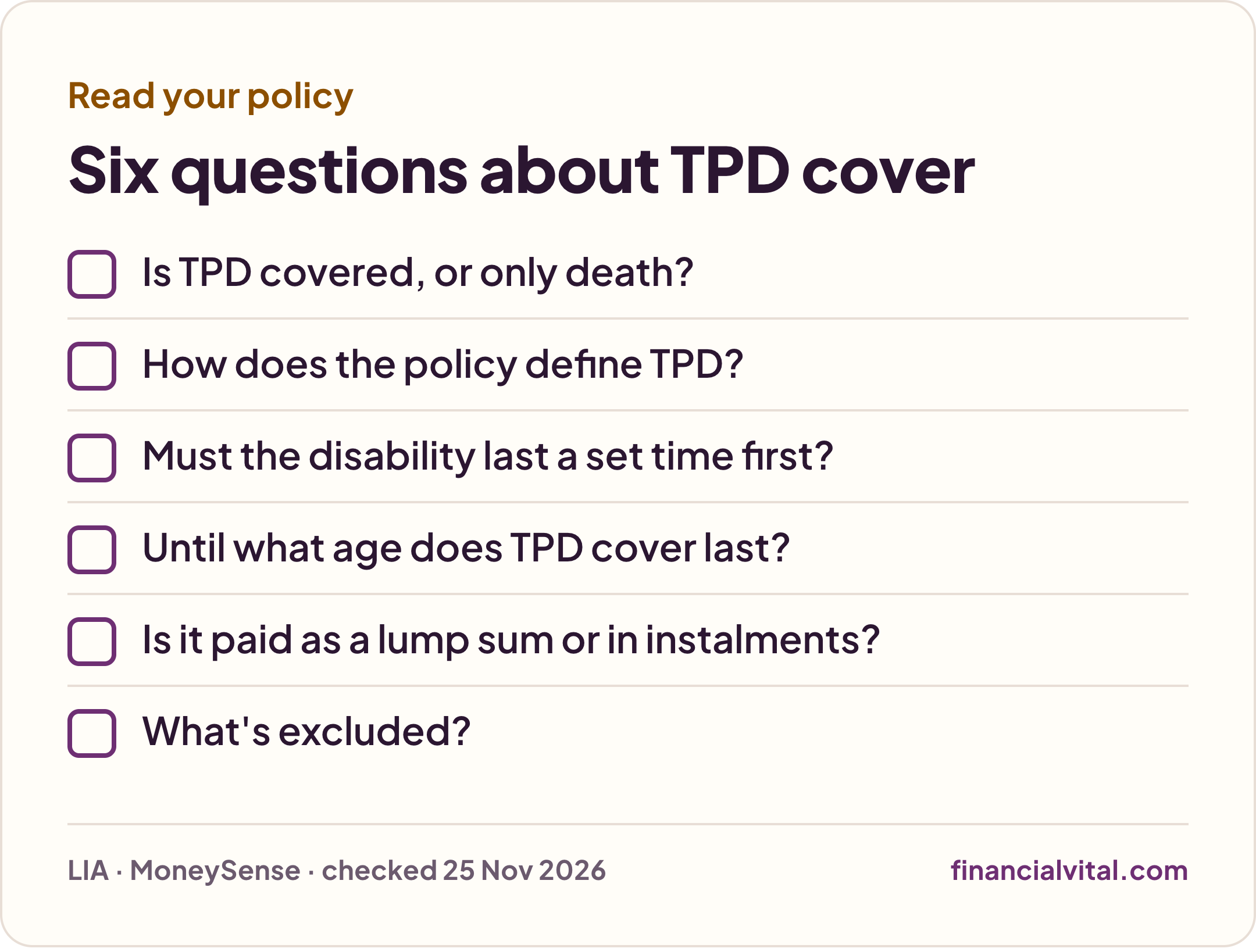
There’s no single definition. One example: the Life Insurance Association’s guidelines for direct-purchase policies describe TPD as being completely unable to work in any occupation, or a total and irrecoverable physical loss, caused by an accident or sickness, with cover lasting up to age 65. Other policies word it differently. MoneySense notes that definitions of disability and payment schedules vary across products and insurers, so the definition in your own policy is the one that counts.
What’s different in Singapore
The national layers are for citizens and PRs. CareShield Life, Singapore’s long-term care insurance, pays out every month for as long as someone can’t perform three or more activities of daily living. It covers Singapore citizens and permanent residents, automatically from age 30 for those born in 1980 or later. The Dependants’ Protection Scheme, which pays on death, terminal illness or TPD, is also only for citizens and PRs. Families living in Singapore on passes don’t have these layers.
Different insurance pays for different parts. MoneySense separates three needs: money for you and your family if TPD happens, which life insurance can provide; replacing income while you can’t work, which is what disability income insurance is for; and paying for care if you’re severely disabled, which is what long-term care insurance does.
Why it can strain a family for years
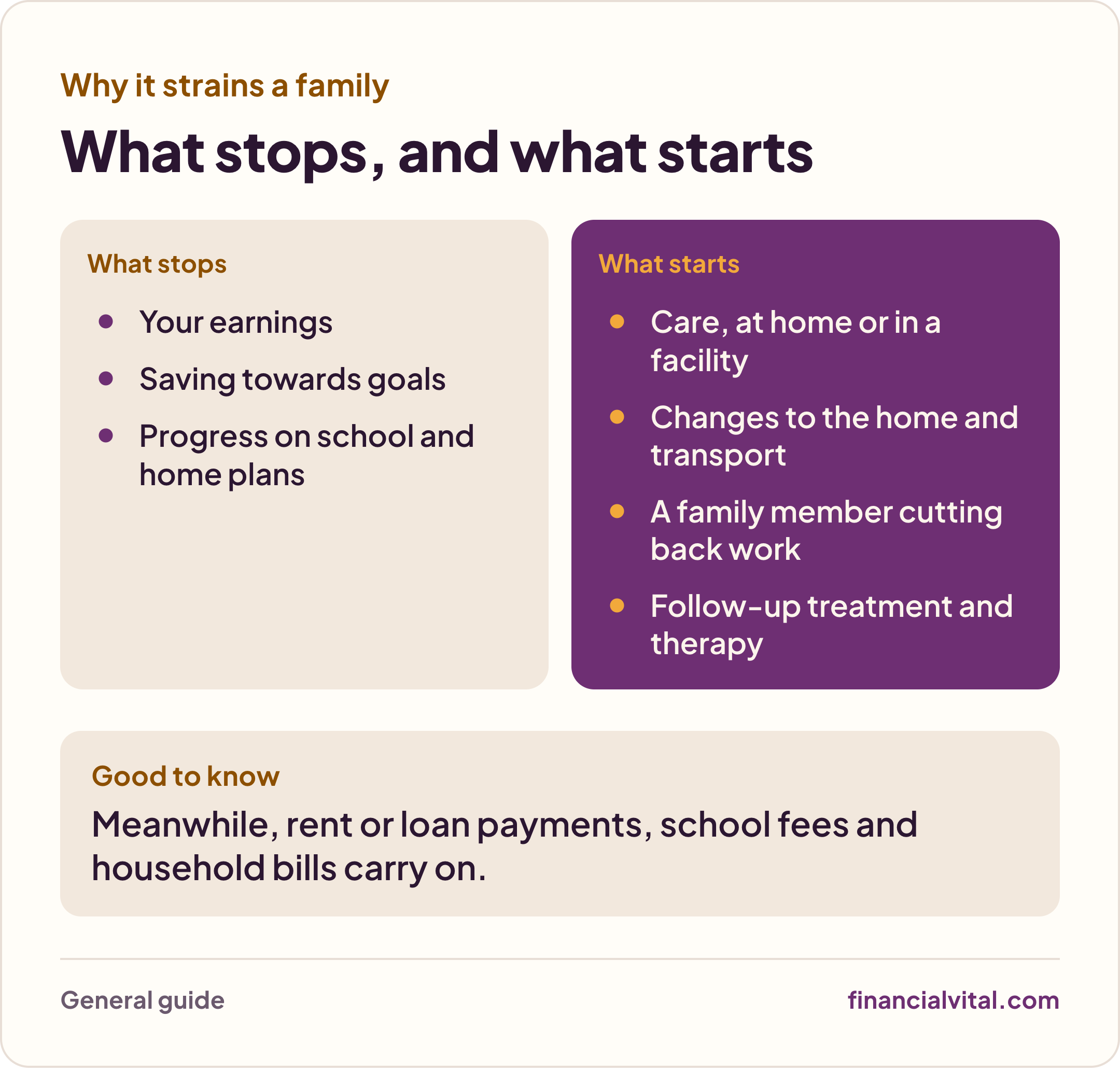
- The income stops for good. Unlike a short illness, a permanent disability can end earning for decades.
- Daily costs carry on. Rent or a mortgage, school fees and household bills keep coming.
- Care adds new costs. Help at home, therapy, equipment, transport, or a care facility.
- A second income may shrink. A partner or relative may cut back work to give care.
- Two countries can mean two sets of costs. Care in one country, a household in the other.
What this doesn’t do
It explains TPD in general. It doesn’t describe any plan’s cover: the definition and terms in your own policy are the ones that apply.
Learn with others
Questions about managing money between Indonesia and Singapore? Join the Financial Vital community to learn alongside other Indonesian families and business owners.
Sources
All checked on 25 Nov 2026.
- LIA: Guidelines for direct purchase insurance (PDF): an example TPD definition: unable to work in any occupation, or total and irrecoverable physical loss; cover up to age 65
- MoneySense: Understanding term insurance: definitions of disability and payment schedules vary across products and insurers
- MoneySense: Understanding health insurance: disability income insurance replaces income; long-term care insurance pays for care
- MoneySense: Assessing your insurance needs: life insurance can provide money if you suffer total and permanent disability
- CPF Board: What is CareShield Life?: payouts while unable to do three or more activities of daily living; Singapore citizens and PRs born in 1980 or later
- CPF Board: Who is covered under the Dependants’ Protection Scheme?: Singapore citizens and permanent residents aged 16 to 65