
Many Indonesian families hold health cover at home and come to Singapore for treatment, or live in Singapore and travel home. Whether a policy pays for care in another country depends on its wording: where it covers you, what it needs before treatment, and how it pays. The time to check is before you need it.
Why it’s worth checking first
- Every policy has an area of cover. OJK describes worldwide health insurance as cover that applies internationally, such as benefits at hospitals abroad. A policy without that scope may pay only at home.
- Partner hospitals matter. OJK’s consumer guide notes that health claims are usually made at hospitals and clinics that partner with your insurer.
- Hospitals ask early. Singapore’s National University Hospital asks international patients to bring their insurance card and to know their coverage and the pre-approvals they need.
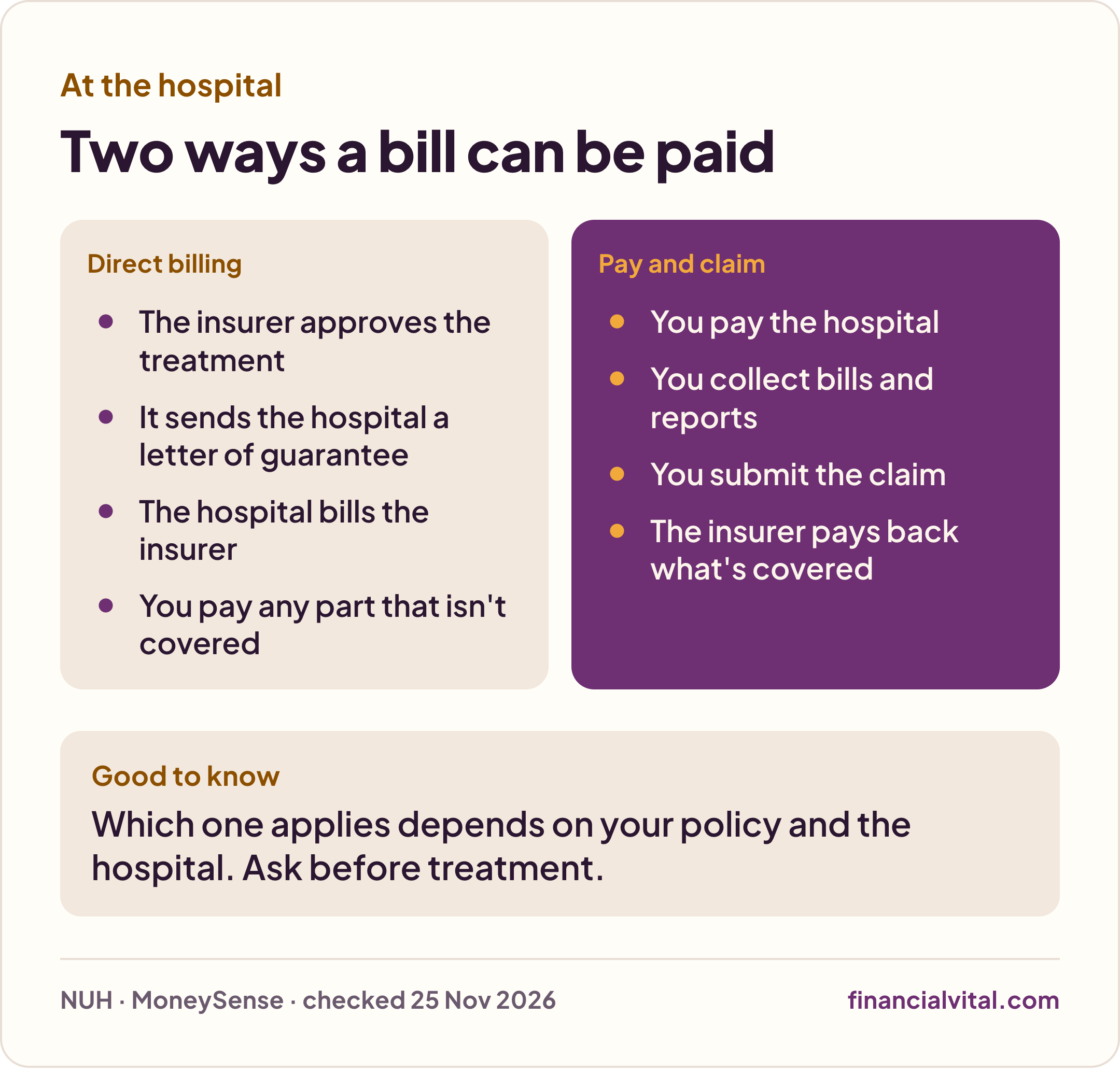
- Payment can be direct or later. Hospitals such as NUH and SGH list a letter of guarantee from an insurer or employer among the documents to bring. Without one, you may need to pay first and claim afterwards: some policies pay on a reimbursement basis.
Step by step
- Find the full policy wording. Not just the card or the summary: the document with the definitions, benefits and exclusions.
- Check where it covers you. Look for the area of cover. Is Singapore included? Is it for emergencies only, or for planned treatment too?
- Check the approval rules. Does planned treatment need your insurer’s approval first? How long does approval take, and what does it need from your doctor?
- Check the limits and your share. Annual and per-condition limits, any deductible or co-payment, and the currency the limits are in.
- Ask how payment works. Can your insurer send the hospital a letter of guarantee, or will you pay first and claim later?
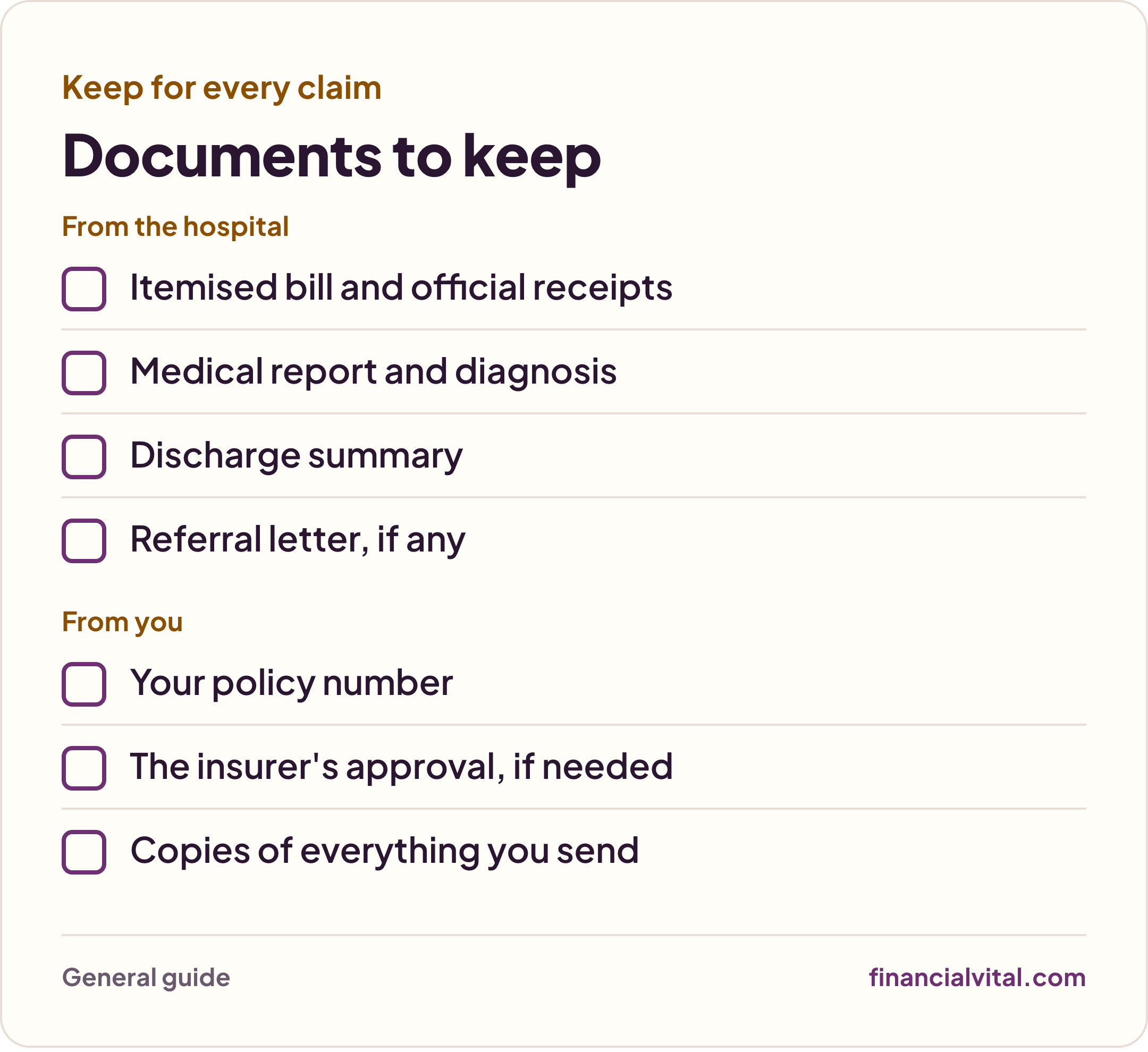
- List the documents a claim needs. Ask whether originals or translations are required, and the deadline for submitting.
- Get the answers in writing. Ask your insurer through its official channels, and keep the reply with your policy.
Questions to ask your insurer
- Does my policy cover treatment in Singapore, and is that planned treatment or emergencies only?
- Do I need approval before admission? How do I apply, and how long does it take?
- Can you issue a letter of guarantee to the hospital?
- What are the limits, and what will I pay myself?
- Which documents do you need for a claim, and by when?
If the answers show a gap, plan for it in your budget and your emergency fund. A treatment trip costs more than the hospital bill lists the costs around treatment, and Inpatient, day surgery and outpatient mean different things on a bill explains terms your policy may use.
Learn with others
Questions about managing money between Indonesia and Singapore? Join the Financial Vital community to learn alongside other Indonesian families and business owners.
Sources
All checked on 25 Nov 2026.
- OJK: Explanatory notes to POJK 14/POJK.05/2015 (PDF, Bahasa Indonesia): worldwide products: cover that applies internationally, such as health insurance with benefits at hospitals abroad
- OJK Sikapi Uangmu: Mau rawat inap? Pahami dulu cara klaim asuransi kesehatan: claims are usually made at hospitals and clinics that partner with your insurer
- NUH: Patient and visitor guide for international patients: bring your insurance card; know your coverage and the pre-approvals needed
- NUH: Patient and family handbook (PDF): a letter of guarantee from an employer or insurance provider
- SGH: What to bring for admission: a letter of guarantee is among the documents to bring
- MoneySense: FAQs for consumers on basic financial planning (PDF): some insurance policies pay on a reimbursement basis
- MoneySense: Health insurance terms: check the scope of cover and the claim limits