
Inflation is a general rise in prices across the economy. When it happens, each Singapore dollar or rupiah buys a little less than before. Money kept as cash keeps its number but loses buying power, unless what it earns keeps up with prices.
What’s different in Singapore
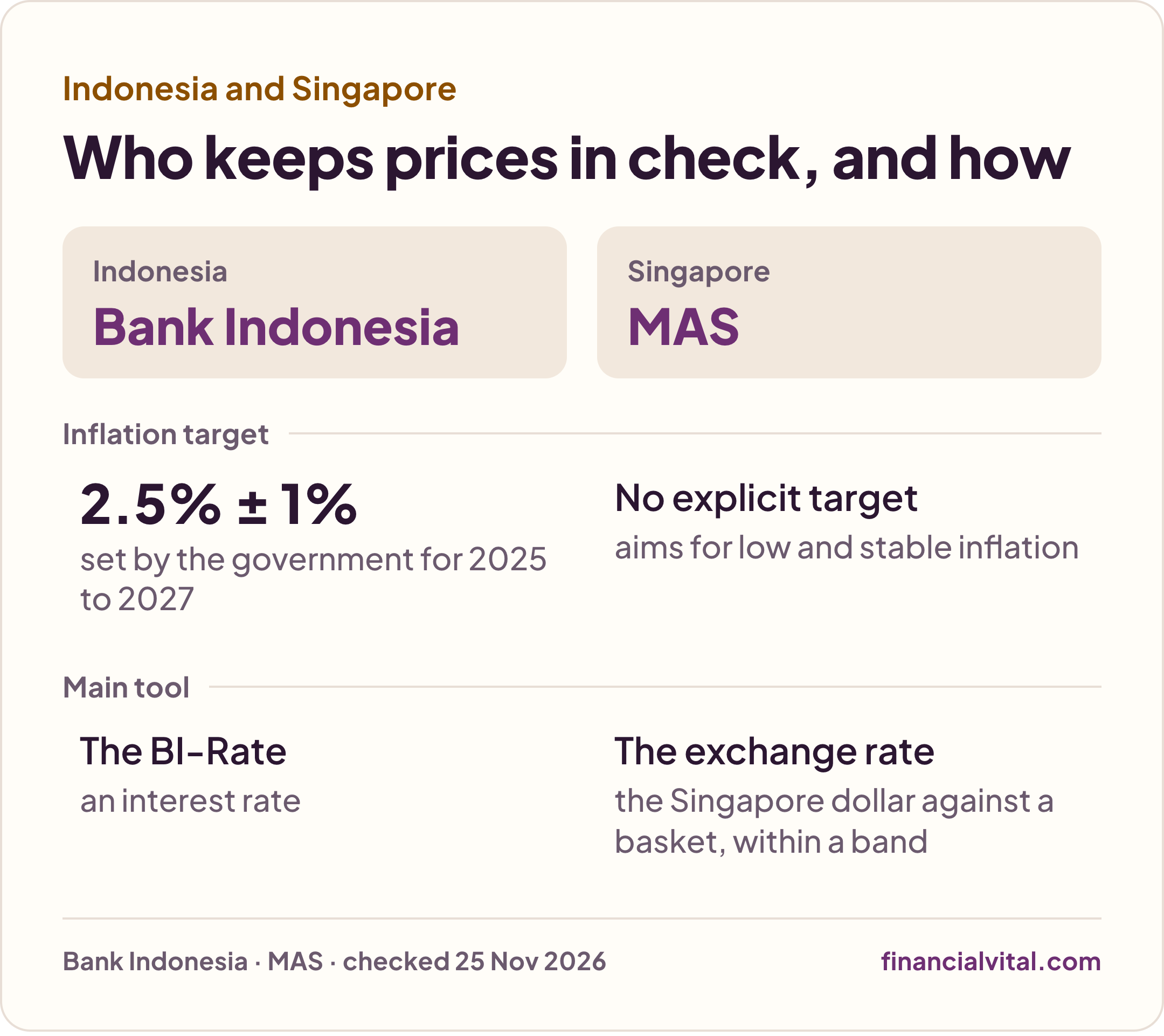
Singapore and Indonesia manage inflation in different ways. The Monetary Authority of Singapore (MAS) has no explicit inflation target. It aims for low and stable inflation by managing the Singapore dollar’s exchange rate, and it watches two measures: MAS Core Inflation and CPI-All Items inflation.
In Indonesia, the government sets an inflation target, 2.5% plus or minus 1% for each year from 2025 to 2027, and Bank Indonesia uses the BI-Rate and its other tools to meet it, working with the government.
For a family with costs in both countries, that means two price trends to watch. Singapore costs follow Singapore prices, Indonesian costs follow Indonesian prices, and the exchange rate links the two.
How fast it adds up
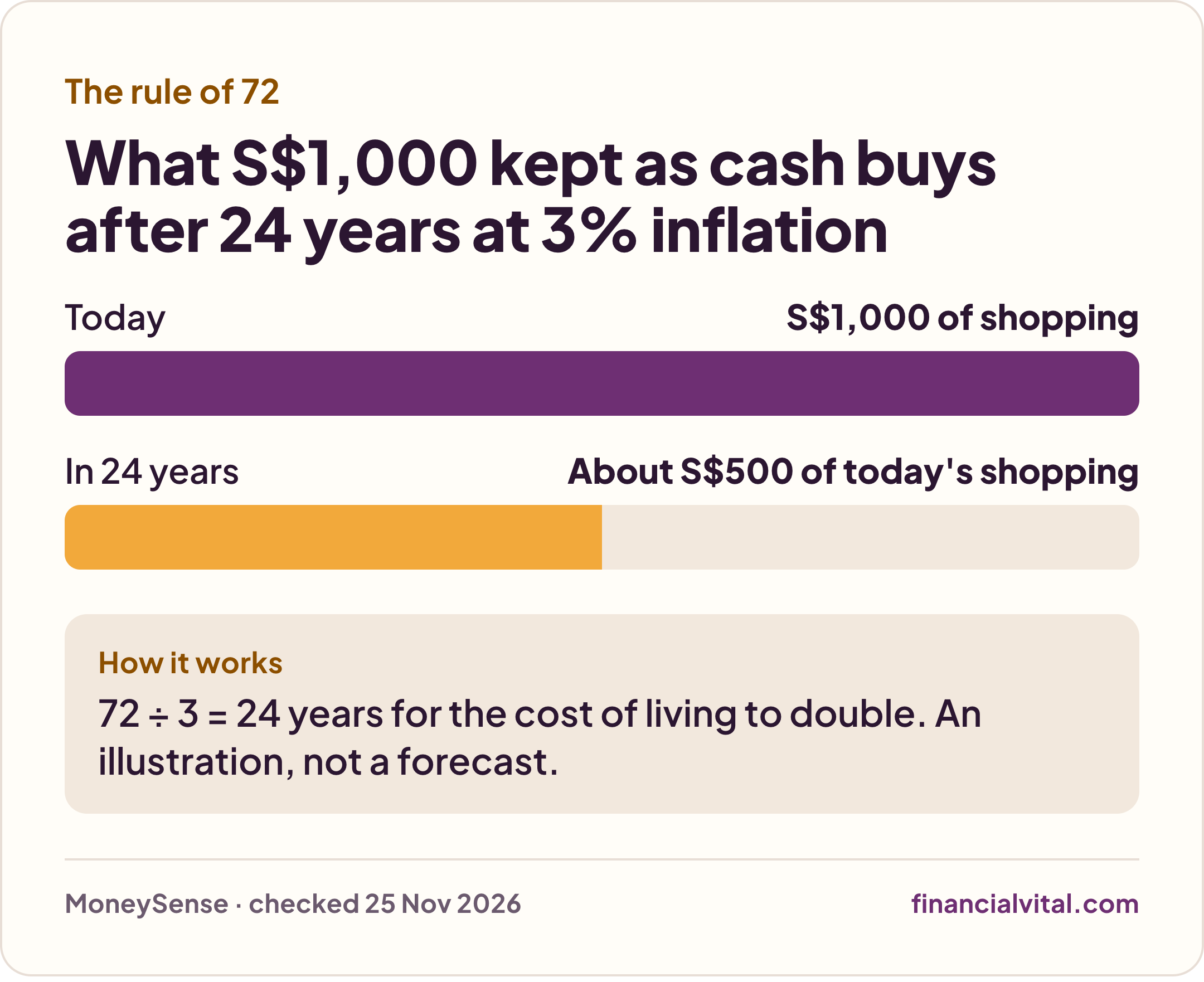
MoneySense, Singapore’s national financial education programme, gives a simple rule: divide 72 by the inflation rate to estimate how many years it takes for the cost of living to double. At 3% inflation, the cost of living doubles in about 24 years. At 4%, it doubles in about 18.
So S$1,000 kept as cash for 24 years at 3% inflation would buy roughly what S$500 buys today. The same rule works for rupiah, with Indonesian inflation.
What to weigh
- Cash has jobs to do. An emergency fund and money for bills due soon need to be safe and easy to reach, even if inflation erodes them a little.
- Interest helps if it keeps up. What matters is whether the interest you earn, after fees, keeps pace with prices.
- Other options carry other risks. Investments can grow faster than prices, but their value can also fall, sometimes for years.
- Look at your own costs. School fees, rent and medical bills can rise faster or slower than prices in general.
Learn with others
Questions about managing money between Indonesia and Singapore? Join the Financial Vital community to learn alongside other Indonesian families and business owners.
Sources
All checked on 25 Nov 2026.
- MAS: Understanding inflation and monetary policy: what inflation is, and how it erodes buying power
- MAS: What is the objective of monetary policy in Singapore?: no explicit inflation target; MAS Core Inflation and CPI-All Items
- MAS: How does MAS carry out monetary policy?: the exchange rate as MAS’s tool
- Bank Indonesia: Inflation: the government’s target of 2.5% plus or minus 1% for 2025 to 2027
- MoneySense: Planning for retirement: the rule of 72 and how fast the cost of living doubles